ParkPow Notifications Setup Guide
ParkPow offers the functionality to send alert notifications based via webhooks, by using different services and platforms. This enables users to receive real-time alerts when vehicles of interest are detected, directly on their preferred communication channels. This guide provides step-by-step instructions on how to set up notifications for the supported platforms.
Supported Platforms
| Platform | Instructions |
|---|---|
| Pushbullet | Integration Steps |
| Slack | Integration Steps |
| Telegram | Integration Steps |
| Discord | Integration Steps |
| Microsoft Power Automate | Integration Steps |
| Microsoft Teams | Integration Steps |
| Google Chat | Integration Steps |
Pushbullet
Description
Pushbullet allows you to receive real-time push notifications on your desktop, Android and iOS devices, and web browsers. Ideal for instant alerts when vehicles of interest are detected. Their API can be used for totally custom notifications.
Requirements
- A Pushbullet account (free or paid)
- Pushbullet app installed on devices where you want to receive notifications
- API access token from your Pushbullet account
Webhook Setup Steps
-
Install the Pushbullet app and login with your account on all devices where you want to receive notifications
-
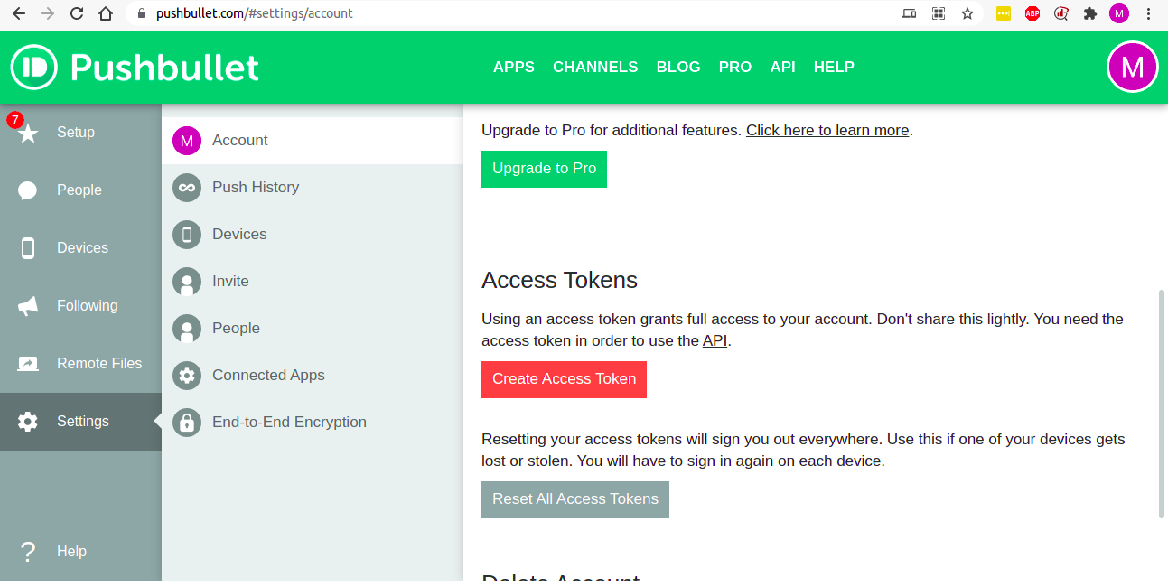
Create your Pushbullet API token:
- Go to your account's settings
- Navigate to the "Access Tokens" section
- Click "Create Access Token"
-
Copy the generated token for use in ParkPow configuration
ParkPow Configuration
- Create a new Webhook in ParkPow
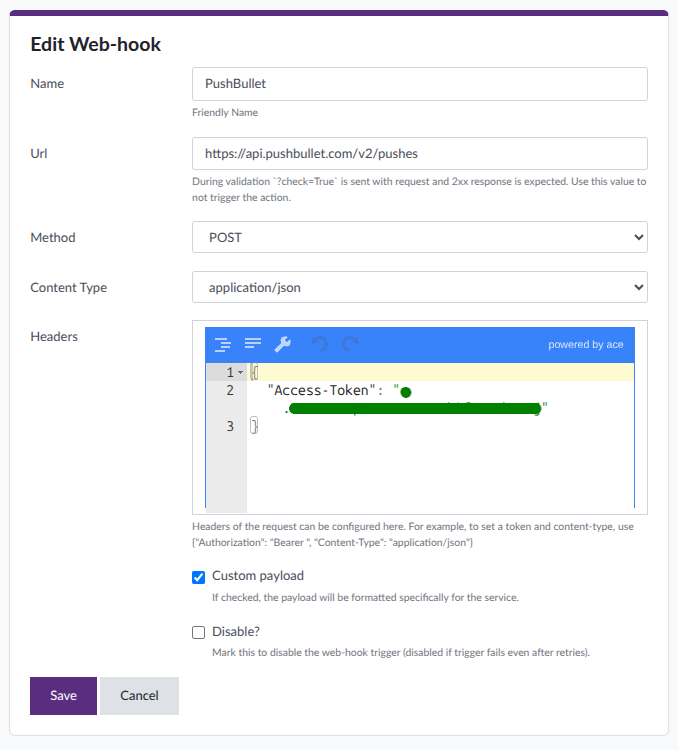
- Configure the webhook with the following settings:
- URL:
https://api.pushbullet.com/v2/pushes - HTTP Method: POST
- Content Type: application/json
- Custom payload: Check this checkbox (required)
- Headers: Add the following header, replacing
<your_access_token_here>with your actual Pushbullet token:{
"Access-Token": "YOUR_PUSHBULLET_ACCESS_TOKEN"
}
- URL:
Replace YOUR_PUSHBULLET_ACCESS_TOKEN with your actual Pushbullet API token found in your account settings. Never share or commit this token.
- Save the webhook configuration
- Create a new ParkPow alert
- Select the Pushbullet webhook from the
Webhooksdrop-down menu
- Select the Pushbullet webhook from the
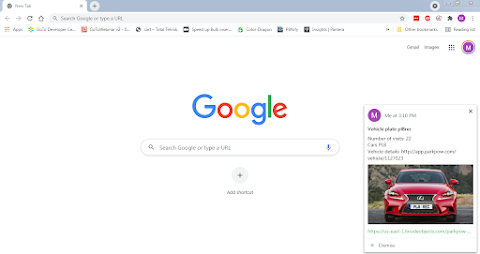
You will now receive notifications when matching vehicles are detected:
Slack
Description
Slack integration enables you to receive ParkPow alerts directly in your Slack workspace channels. Perfect for team collaboration and monitoring.
Requirements
- A Slack workspace with permissions to create incoming webhooks
- Access to the Slack channel where you want to receive notifications
Only alerts that have an image will be forwarded to Slack. Please make sure that clients that send data to ParkPow are configured to send images along with the vehicle data. Please refer to Snapshot Webhook Guide and Stream Webhook Guide for more information.
Webhook Setup Steps
- Follow the Slack Incoming Webhooks Guide to create a webhook
- Select the channel where you want to receive ParkPow notifications
- Copy the generated webhook URL
ParkPow Configuration
- Create a new Webhook in ParkPow
- Configure the webhook with the following settings:
- URL: Paste the Slack webhook URL you obtained
- HTTP Method: POST
- Content Type: application/json
- Custom payload: Check this checkbox (required)
- Save the webhook configuration
- Create a new ParkPow alert
- Select the Slack webhook from the
Webhooksdrop-down menu
- Select the Slack webhook from the
Telegram
Description
Telegram integration allows you to receive ParkPow alerts through Telegram bots. Supports both text-only messages and messages with vehicle images.
Requirements
- A Telegram account
- Access to @BotFather to create a bot
- Your Telegram Chat ID
Webhook Setup Steps
- Create a bot and get a Bot token from @BotFather
- Start a conversation with your bot by sending it any message
- Get your Chat ID by visiting the following URL in your browser (replace
YOUR_BOT_TOKENwith your bot token):https://api.telegram.org/botYOUR_BOT_TOKEN/getUpdates - Look for the
"chat":{"id":field in the response to find your Chat ID - Choose your webhook URL based on your preference:
- For text-only alerts (without image):
https://api.telegram.org/botYOUR_BOT_TOKEN/sendMessage - For alerts with vehicle images:
https://api.telegram.org/botYOUR_BOT_TOKEN/sendPhoto
- For text-only alerts (without image):
ParkPow Configuration
- Create a new Webhook in ParkPow
- Configure the webhook with the following settings:
- URL: Paste the Telegram webhook URL you created (either
sendMessageorsendPhoto) - HTTP Method: POST
- Content Type: application/json
- Custom payload: Check this checkbox (required)
- Telegram Chat ID: Enter your Chat ID in the field that appears
- URL: Paste the Telegram webhook URL you created (either
- Save the webhook configuration
- Create a new ParkPow alert
- Select the Telegram webhook from the
Webhooksdrop-down menu
- Select the Telegram webhook from the
Discord
Description
Discord integration enables you to receive ParkPow alerts in your Discord server channels. Ideal for community monitoring and team notifications.
Requirements
- A Discord server with permissions to create webhooks
- Access to the Discord channel where you want to receive notifications
Webhook Setup Steps
- Follow the Discord Webhooks Guide to create a channel webhook
- Select the channel where you want to receive ParkPow notifications
- Copy the generated webhook URL
ParkPow Configuration
- Create a new Webhook in ParkPow
- Configure the webhook with the following settings:
- URL: Paste the Discord webhook URL you obtained
- HTTP Method: POST
- Content Type: application/json
- Custom payload: Check this checkbox (required)
- Save the webhook configuration
- Create a new ParkPow alert
- Select the Discord webhook from the
Webhooksdrop-down menu
- Select the Discord webhook from the
Microsoft Power Automate
Description
Microsoft Power Automate integration allows you to create automated workflows that post ParkPow alerts to Microsoft Teams channels or chats. Provides advanced customization options for alert formatting and routing.
Requirements
Some Teams plans like the free version lack this feature. Power Automate webhooks are available with Microsoft 365 for business plans such as "Microsoft 365 Business Basic" or higher.
- Microsoft 365 for business account
- Microsoft Teams access
- Permissions to create Power Automate workflows
Webhook Setup Steps
Option A: Configuration from Power Automate
-
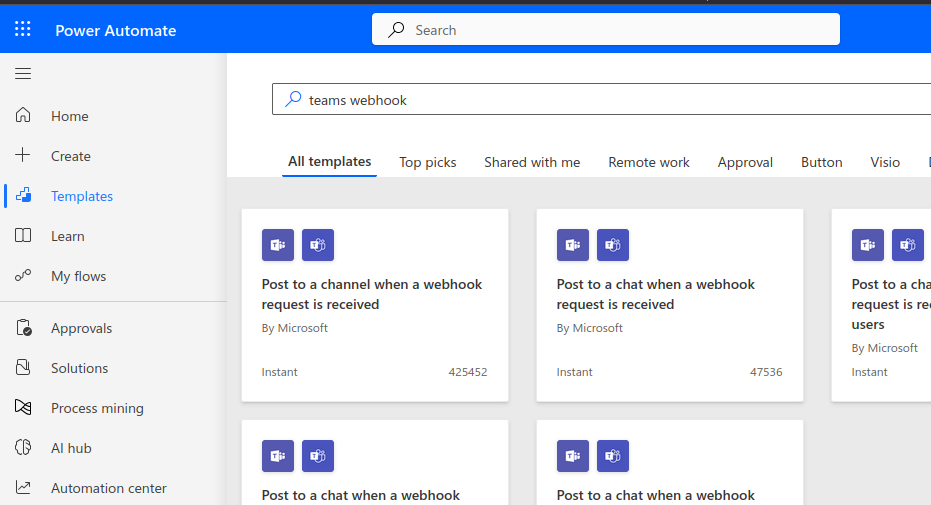
In Power Automate templates tab, search for "teams webhook"
-
Select a template that matches your requirements
-
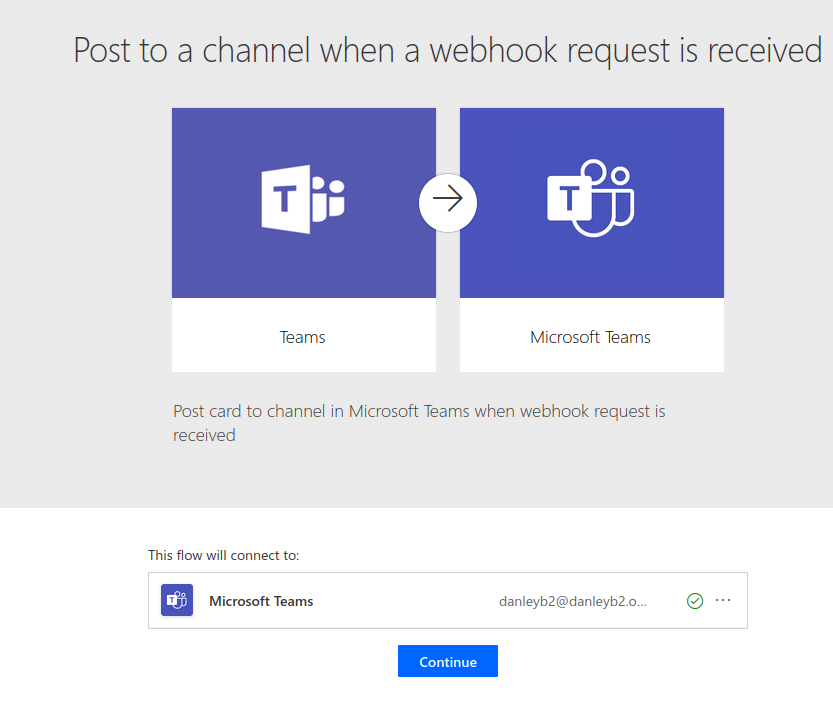
Connect your Microsoft Teams Account then click Continue
-
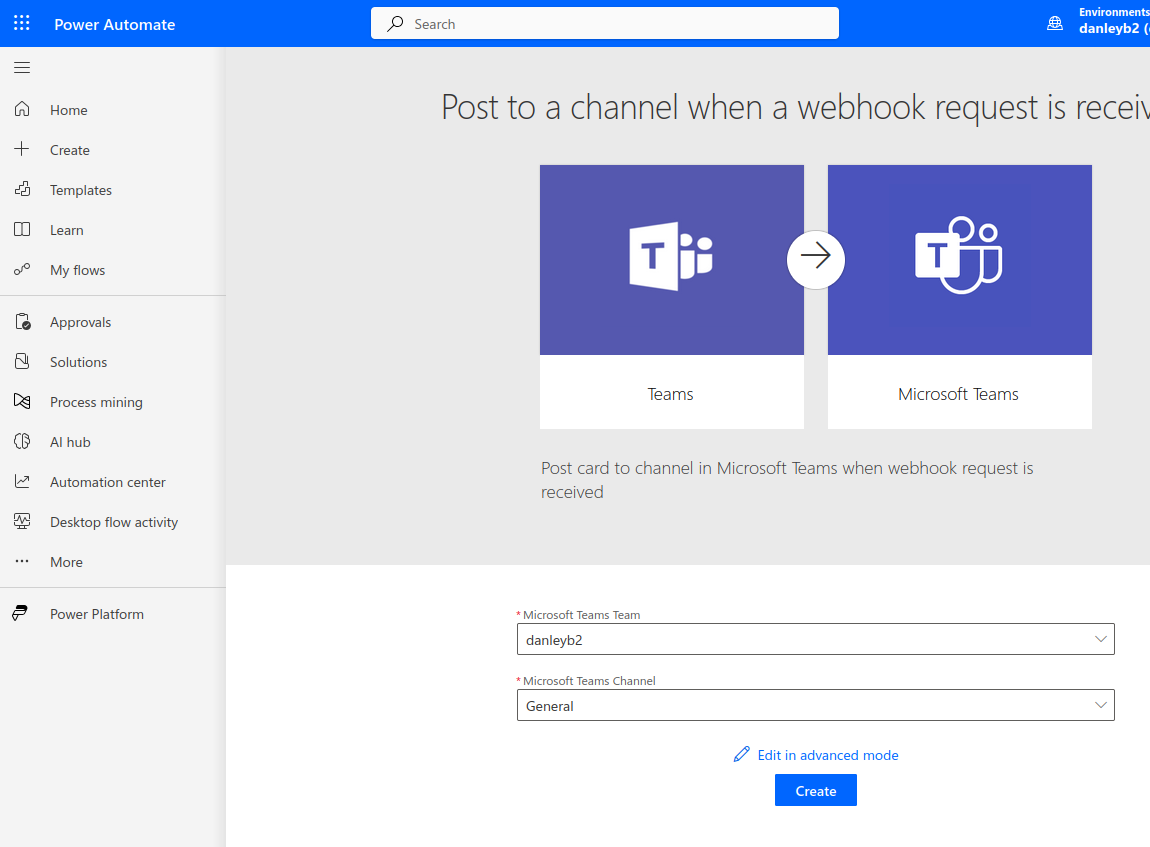
Select the Teams' Team and Channel (or Chat for other templates) to post the alerts then click Create
-
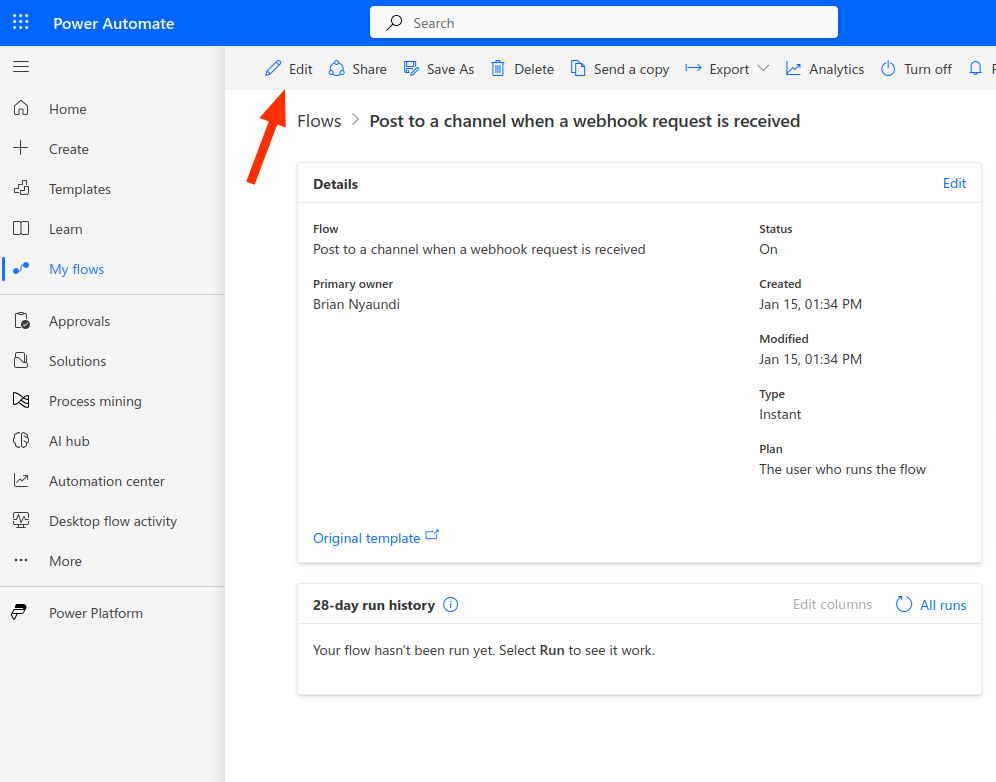
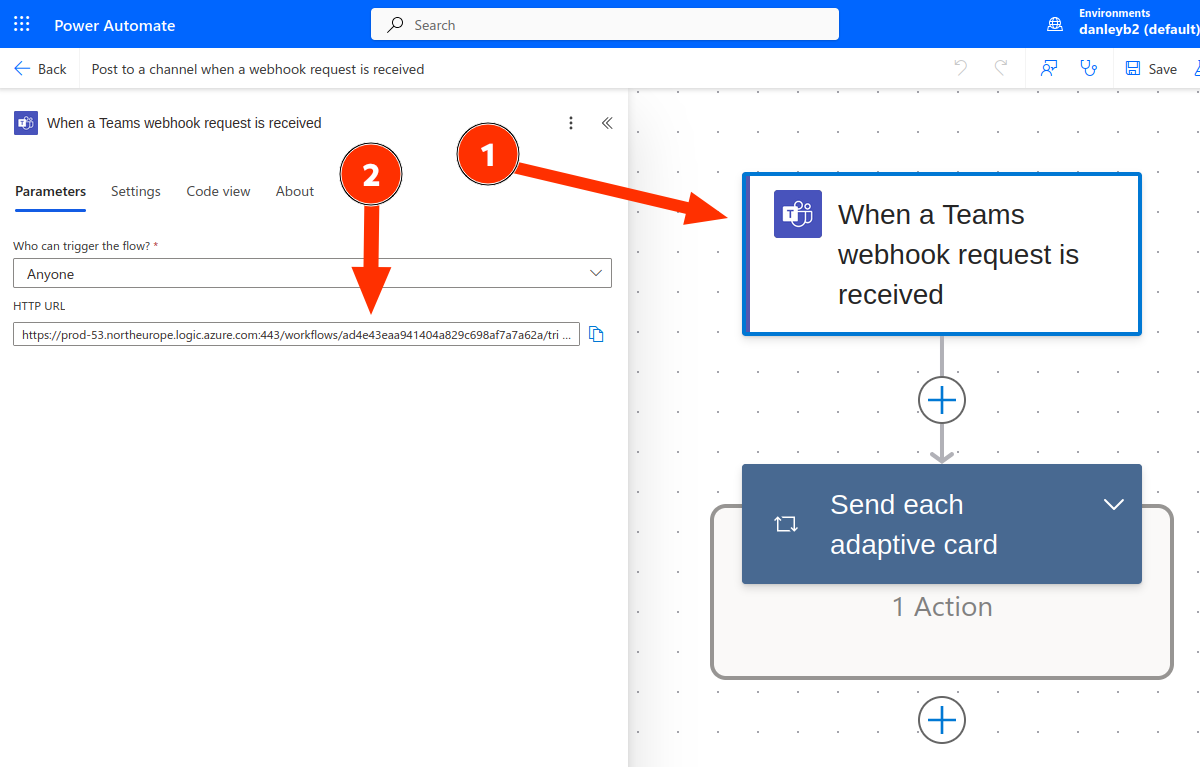
To view the webhook URL, click Edit to load the designer, then click the first item in the designer
-
Copy the webhook URL for ParkPow configuration
Option B: Configuration from Teams
-
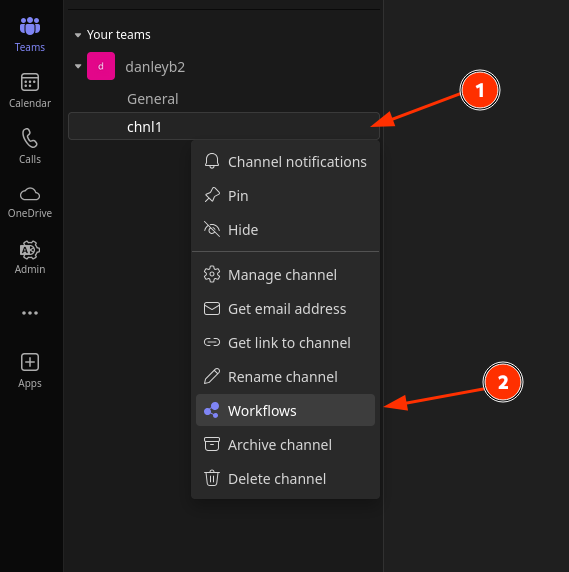
Click on the More options button of a chat or channel, then select Workflows
-
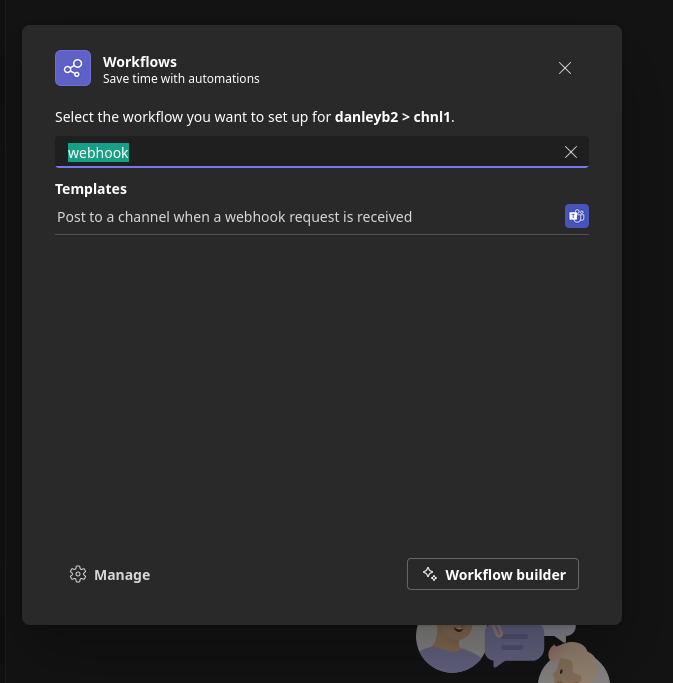
Search for "webhook" then select the desired template
-
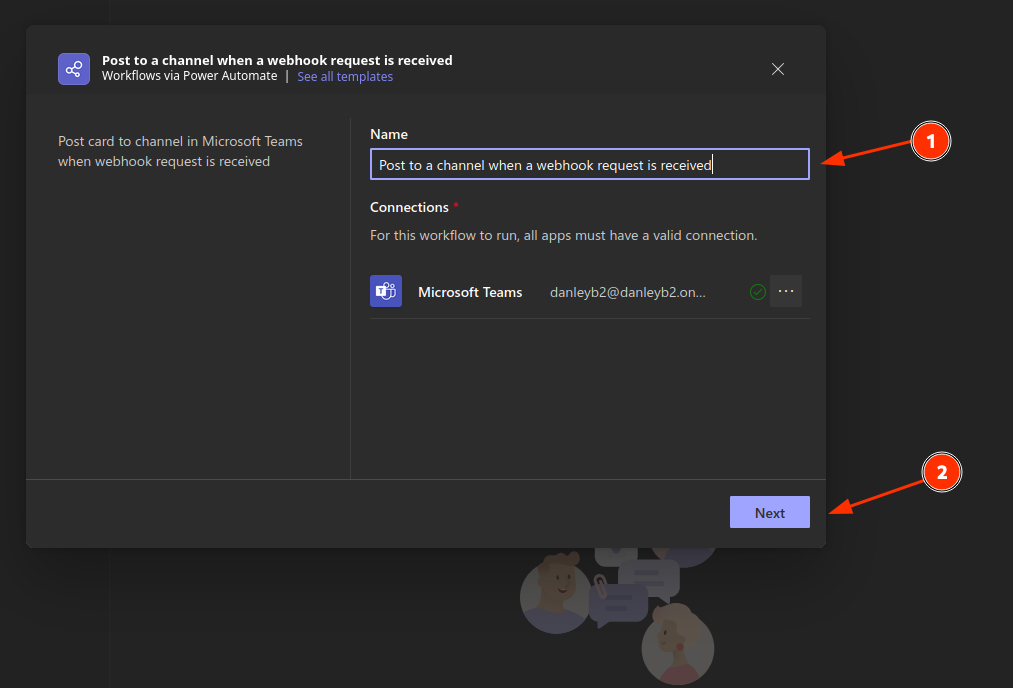
Update the workflow name as desired then click "Next"
-
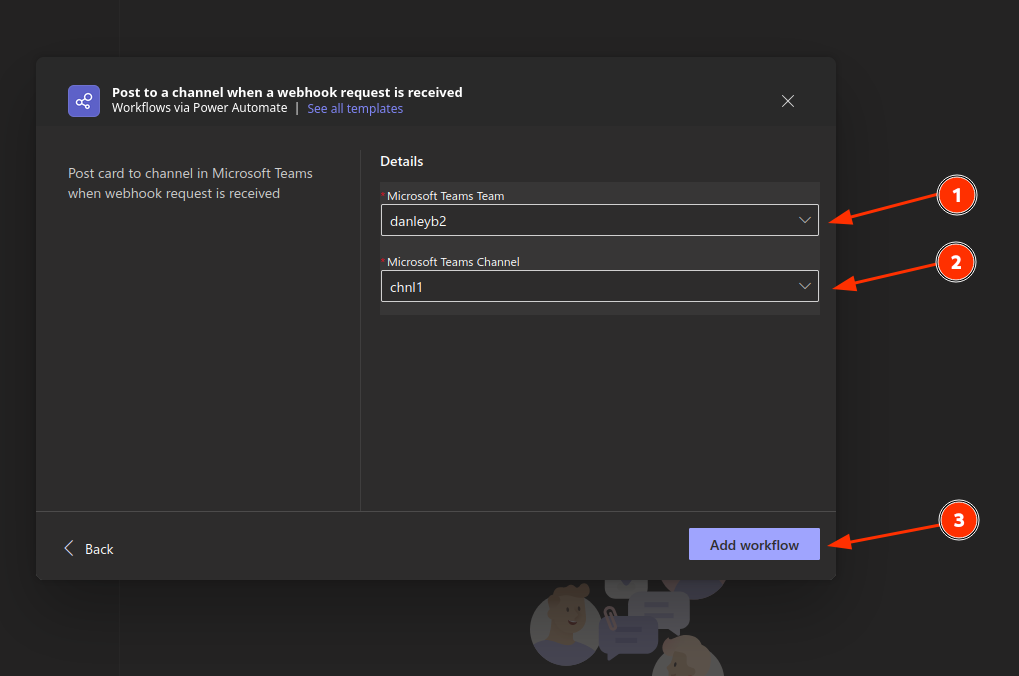
Select the Teams' Team and Channel (or Chat for other templates) to post the alerts then click Add Workflow
-
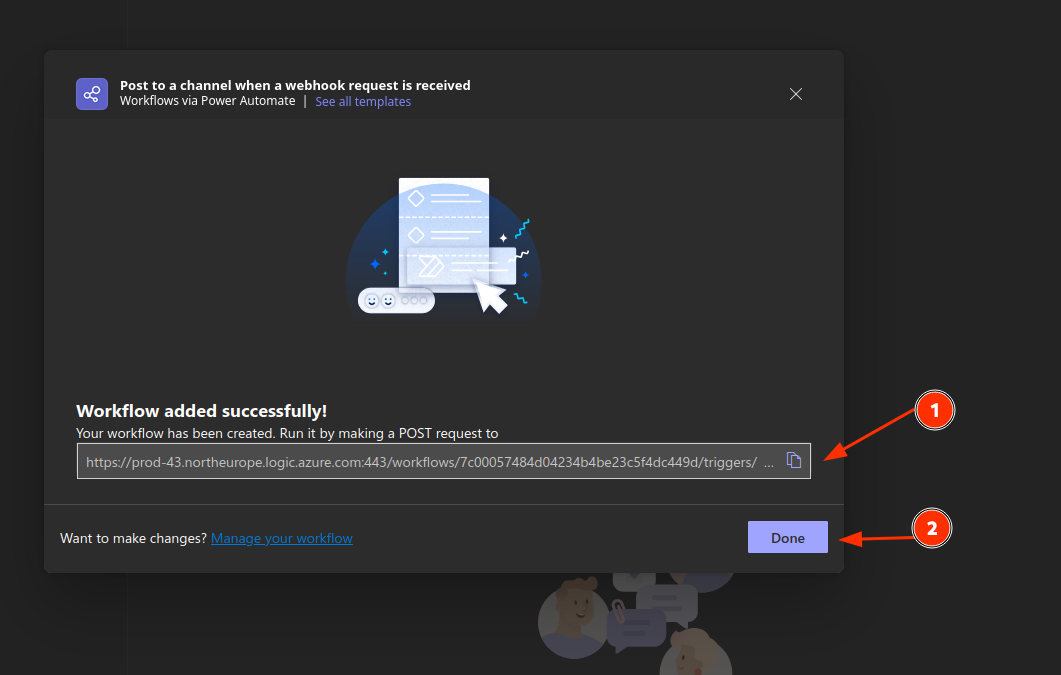
Copy the shown webhook URL then click Done
ParkPow Configuration
- Create a new Webhook in ParkPow
- Configure the webhook with the following settings:
- URL: Paste the Power Automate webhook URL you obtained
- HTTP Method: POST
- Content Type: application/json
- Custom payload: Check this checkbox (required)
- Save the webhook configuration
- Create a new ParkPow alert
- Select the Power Automate webhook from the
Webhooksdrop-down menu
- Select the Power Automate webhook from the
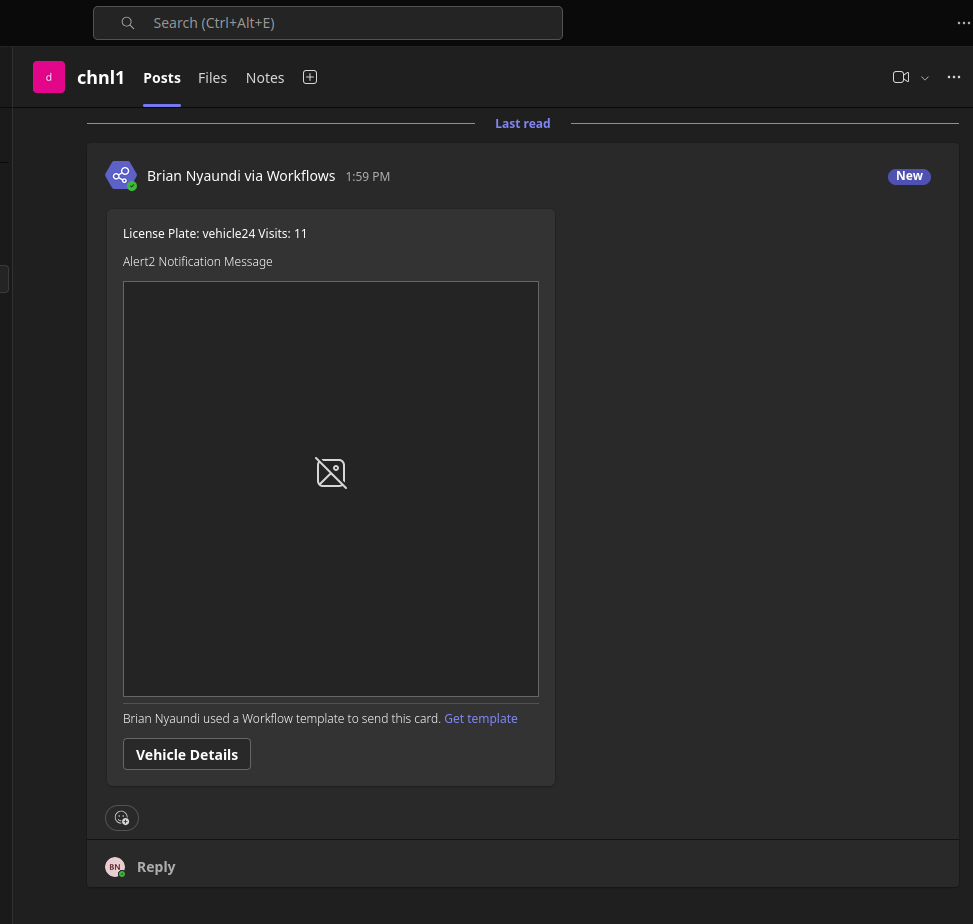
New ParkPow alerts will start appearing in your configured Teams channel or chat:
-
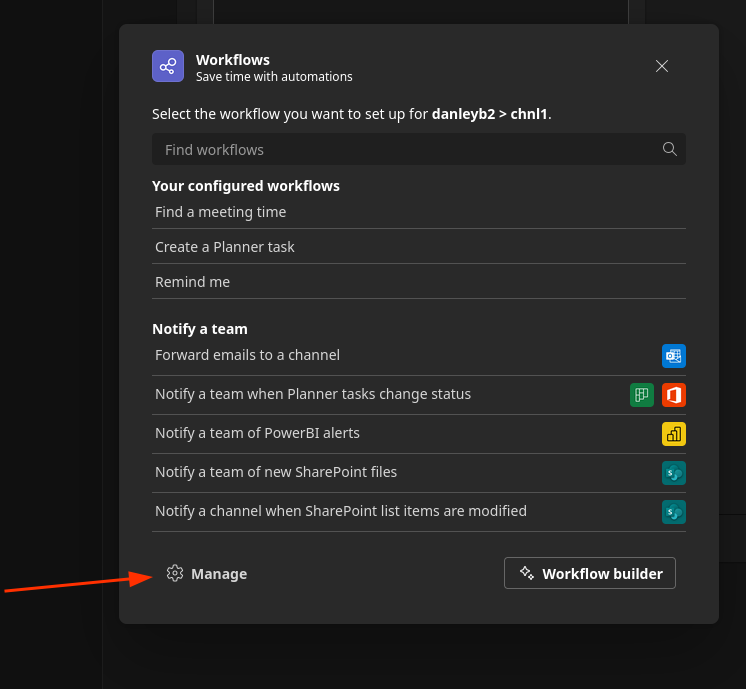
To edit the workflow and view more info, click on the chat/channel More options > Workflows > Manage
-
Use the Run History of a workflow to check if ParkPow alerts are reaching Power Automate and processing successfully
Microsoft Teams
Description
Microsoft Teams direct webhook integration allows you to post ParkPow alerts directly to Teams channels using incoming webhooks. This is a simpler alternative to Power Automate for basic notifications.
Requirements
- Microsoft Teams account
- Permissions to add incoming webhooks to a Teams channel
Webhook Setup Steps
- Follow the Microsoft Teams Incoming Webhook Guide
- Select the channel where you want to receive ParkPow notifications
- Configure the webhook name and optional image
- Copy the generated webhook URL
ParkPow Configuration
- Create a new Webhook in ParkPow
- Configure the webhook with the following settings:
- URL: Paste the Teams webhook URL you obtained
- HTTP Method: POST
- Content Type: application/json
- Custom payload: Check this checkbox (required)
- Save the webhook configuration
- Create a new ParkPow alert
- Select the Teams webhook from the
Webhooksdrop-down menu
- Select the Teams webhook from the
Google Chat
Description
Google Chat integration enables you to receive ParkPow alerts in your Google Chat spaces. Perfect for teams using Google Workspace.
Requirements
- Google Workspace account
- Access to Google Chat
- Permissions to create incoming webhooks in a Google Chat space
Webhook Setup Steps
- Follow the Google Chat Incoming Webhook Guide
- Select the space where you want to receive ParkPow notifications
- Register and configure the incoming webhook
- Copy the generated webhook URL
ParkPow Configuration
- Create a new Webhook in ParkPow
- Configure the webhook with the following settings:
- URL: Paste the Google Chat webhook URL you obtained
- HTTP Method: POST
- Content Type: application/json
- Custom payload: Check this checkbox (required)
- Save the webhook configuration
- Create a new ParkPow alert
- Select the Google Chat webhook from the
Webhooksdrop-down menu
- Select the Google Chat webhook from the
Alert Criteria Configuration
When creating a ParkPow alert, you can define specific criteria to filter which vehicles will trigger notifications. This allows you to customize alerts based on license plates, vehicle types, colors, or other attributes.
For detailed instructions on configuring alert criteria, please refer to the ParkPow Alert Configuration Guide. In order to use the notification webhooks, make sure to select the desired webhook from the Webhooks drop-down menu during alert creation.
Troubleshooting
For any issues related to notifications, please refer to the ParkPow FAQ or contact our support team at [email protected].