Alerts
Receive alerts via email, MQTT, or webhook to a third-party system. See examples of Alerts that you can easily set up.
If you are using ParkPow Cloud, you can expect a 1 to 3 seconds delay between the API call and receiving the alert. The variance depends on the client location (is it close to our server in the US?) and the webhook target location.
Alert Templates
The Alert Templates page allows you to manage all your alert configurations. The system will send a maximum of 100 emails per hour to prevent spam.
Alert Template Table
Each alert template displays the following information:
- Name: The name of the alert template
- Emails: Email addresses configured to receive alerts (displays "None" if not configured)
- Site: The site(s) where the alert is active
- Enabled: Whether the alert is currently active (✓) or disabled (✗)
- Tag Filter: Whether tag filtering is enabled for this alert
- Vehicle Filter: Whether vehicle filtering is enabled for this alert
- Actions: Available actions include:
- Duplicate: Create a copy of the alert template
- Edit: Modify the alert configuration
- Delete: Remove the alert template
Filtering and Search
You can filter alert templates using:
- Search by name: Find specific alerts by their name
- Filter by Site: View alerts for specific sites
- Tag Filter: Filter alerts that have tag filtering enabled
- Vehicle Filter: Filter alerts with vehicle filtering enabled
Notification Methods
Email
- Send a report to one or more email addresses.
- Depending on your wireless carrier, you can even get a text message alert (e.g., [email protected]).
- Email addresses can be configured in the alert template's notification settings.
Webhook
- Receive alerts via webhooks to send information by the POST, GET or PATCH methods. These webhooks will be triggered according to the configuration of each alert.
- If the user's endpoint is unavailable for any reason, the webhook is disabled until you manually reactivate it.
- Webhooks can include images with the alert data.
ParkPow will automatically retry a failed webhook delivery up to five times (with a 20-second interval between each try) after the initial failure. If all retry attempts fail and the webhook remains non-responsive for 5 hours, the webhook endpoint will be automatically disabled. It will require manual reactivation by the user to resume service. An email notification with the subject "Alert Webhook Failure" will be sent to the ParkPow account owner to inform them of the issue.
MQTT
- IoT devices and other external systems can receive real-time alert notifications via the MQTT protocol.
- Every ParkPow user is given authentication credentials and a dedicated MQTT topic. Subscribe to the topic on ParkPow's MQTT broker at
app.parkpow.comon port1883. - Find your topic and authentication credentials on the alert templates page.
MQTT Connection Details:
- MQTT Broker:
app.parkpow.com:1883 - Topic:
alerts/1234/abcdefgg...=(may vary per user) - Username: Your unique username (displayed on the alerts page)
- Password: Authentication happens via JWT, so the password can be any non-empty string
You can use mosquitto_sub to subscribe to a topic:
mosquitto_sub -h app.parkpow.com -p 1883 -t topic -u username -P password -d
Camera Anomaly Detection
Detect abnormal traffic in the camera feed and receive alerts. Enable this feature from the camera settings.
Messaging App Integrations
Using a webhook URL from the services below automatically formats the alert into their expected format. Check out the guides on how to get external URLs to add to ParkPow.
Supported integrations:
Configure Alert Templates
When creating or editing an alert template, you can configure the following settings:
Basic Information
- Name: Give your alert template a descriptive name.
- Shared: If enabled, alerts created from this template will be visible to all users in the organization.
- Enable Rate Limit: Enabling this setting will prevent the creation of multiple similar alerts for the same vehicle within a minute.
- API Only: If enabled, the alert will only be triggered via API. It will not be triggered by ParkPow's conditions. To trigger it via the API, check Trigger alert for the given visit id
Notification methods
These are used to configure how you want to be notified outside of ParkPow when an alert is triggered.
Emails
You will only receive email reminders when an alert occurs. Please include only the email address (e.g., [email protected]). You can add several email addresses separated by commas.
Webhooks
Configure webhook URLs to receive alert data. You can:
- Add multiple webhook URLs
- Include images with the webhook, if endpoint supports it.
- Configure the message format for the webhook payload
Please refer to Webhook Settings Guide for more information on setting up webhooks.
Message Format
The message field allows to specify the custom message that will be sent with the alert notification. You can use the following placeholders to include dynamic information:
{vehicle_tags}- Comma-separated list of vehicle tags{custom_fieldN}- where N is the custom field number (e.g.,{custom_field1}for the first custom field)
All of the alerts will contain general information about the alert, such as the alert template name, vehicle plate, make, model, color, type, camera name, camera site, alert name, alert type, alert time, and alert image URL. This field only affects the message content of the alert notification, both for email and webhook notifications (message field in the webhook payload). For more information, please refer to the Alert Result Example.
Example message format:
Full name: {custom_field1} {custom_field2}
Phone number: {custom_field3}
Notes: {custom_field6}
Tags: {vehicle_tags}
This will produce:
Full name: John Doe
Phone number: +1234567890
Notes: This is a note
Tags: Tag1, Tag2, Tag3
The custom fields are referred to by number, and only the values for the vehicle that triggered the alert will be included.
Sites & Tags
- Site: Select one or more sites to include in the alert configuration. Triggers alert on a specific site, or leave blank for all sites.
- Vehicle Tags: Configure tag filters for the alert. If enabled, alerts will only be created for the selected vehicle tags.
- Use Tag: Enable to filter alerts by specific vehicle tags.
- Select Vehicle Tags: For blacklisting, choose one or more vehicle tags. When a vehicle with any of the selected tags is detected, an alert will be triggered. For instance, you can create an alert for Unwanted cars by selecting tags like "Stolen", "Towed", or "Unauthorized".
- Exclude Vehicle Tags: For whitelisting, choose one or more vehicle tags to exclude. When a vehicle with some of the excluded tags is detected, an alert will be triggered. For example, you can tag all your company vehicles with the "Company" tag and create an alert that triggers when any vehicle without the "Company" tag is detected.
- Spotter Tags: If enabled, alerts will only be created for the selected spot tags. Then, you can select one or more parking spot tags to apply as filters.
Direction of Travel
- Angle: Configure the angle range (e.g., 300 (±30°)) to trigger an alert when a vehicle is between these angles. Please upload a camera image and point the arrow in the direction you want to detect.
- Camera: Select one or more cameras to monitor for this alert, based on their placement and field of view.
Time-based Triggers
Alert User Case
Select the type of alert trigger:
- Arrival: Receive an alert when a particular vehicle tag, vehicle type, vehicle make/model/color, or plate is seen by the camera.
- Arrival Frequency: If a vehicle meets the vehicle criteria and is seen more than a specified number of times (e.g., 3 times) within a number of minutes (e.g., 10 minutes), you'll be notified.
- On Premise: If a vehicle meets the vehicle criteria and arrives or is still in the parking lot after a specified time (e.g., 9 PM), you'll be notified.
- Parking Duration: If a vehicle meets the vehicle criteria and has been in the parking lot for more than a specified number of hours, you'll be notified.
For On-Premise and Parking Duration alerts, make sure that you've set up the camera accordingly in ParkPow.
Time of Day
Configure specific times when the alert should be active:
- Set start and end times for alert activation
- Alerts will only be enforced during these time frames (e.g., 12:00 AM - 11:59 PM for 24/7 monitoring)
The time zone is based on the site settings. Please ensure that the site time zone is correctly configured to avoid discrepancies in alert timing.
Weekdays
Select which days of the week the alert will be enforced during these days of the week.
Vehicle Fields
Configure vehicle-specific criteria for triggering alerts:
Make Model Mismatch
- Yes: Alert will be triggered if the vehicle's Make Model field does not match the Make Model of the license plate. The following criteria must be met:
- License plate is detected with a confidence level that the camera will accept (default is 0.7). Please refer to Minimum OCR Score for more information.
- Vehicle Make and Model are detected with a confidence level above the defined Make Model Mismatch Score (default is 0.5)
- Up to the last 10 detections will be used to determine the Make Model of the license plate.
- No: No alert for Make Model mismatches.
Vehicle Plate
Enter the specific license plate (e.g., SN01259) to monitor. If you enter a plate, the alert will be triggered if that plate is detected (whether whitelisted or not). Quotes and wildcards are not supported. If you want to monitor multiple plates, create separate alerts.
Vehicle Make
Select the vehicle make (e.g., Ford) to monitor. If you enter a make, the alert will be triggered when a vehicle of that make is detected. Only alerts with vehicles matching this make will be triggered.
Vehicle Model
Select the vehicle model (e.g., F-150) to monitor. If you enter a model, the alert will be triggered when a vehicle of that model is detected. Only alerts with vehicles matching this model will be triggered.
Vehicle Color
Select the vehicle color (e.g., red) to monitor. If you enter a color, the alert will be triggered when a vehicle of that color is detected. Only alerts with vehicles matching this color will be triggered.
Vehicle Types
Select the vehicle types to monitor (e.g., car, truck, motorcycle). If you select a vehicle type, the alert will be triggered when a vehicle of that type is detected. Only alerts with vehicles matching the selected types will be triggered.
For any of the fields in this section, partial string matching is supported.
- While wildcards are not supported, any plate that contains the entered string will trigger the alert. For example, entering "ABC" will trigger alerts for plates like
1ABC234orXYZABC. - Likewise, entering "Ford" for Vehicle Make will trigger alerts for makes like "Ford", "Ford Motor Company", or "Ford Trucks".
- Please note that the matching is case-insensitive.
For an alert to be triggered, all specified criteria must be met, for all sections.
- For example, if you specify a Vehicle Make of "Toyota" and a Vehicle Color of "Red", the alert will only be triggered when a red Toyota is detected.
- Similarly, if you set a specific time range and weekdays, the alert will only be triggered during those times and days.
- If you leave any field blank, that field will not be considered in the alert triggering process
Alert Result Examples
Email Alert Example
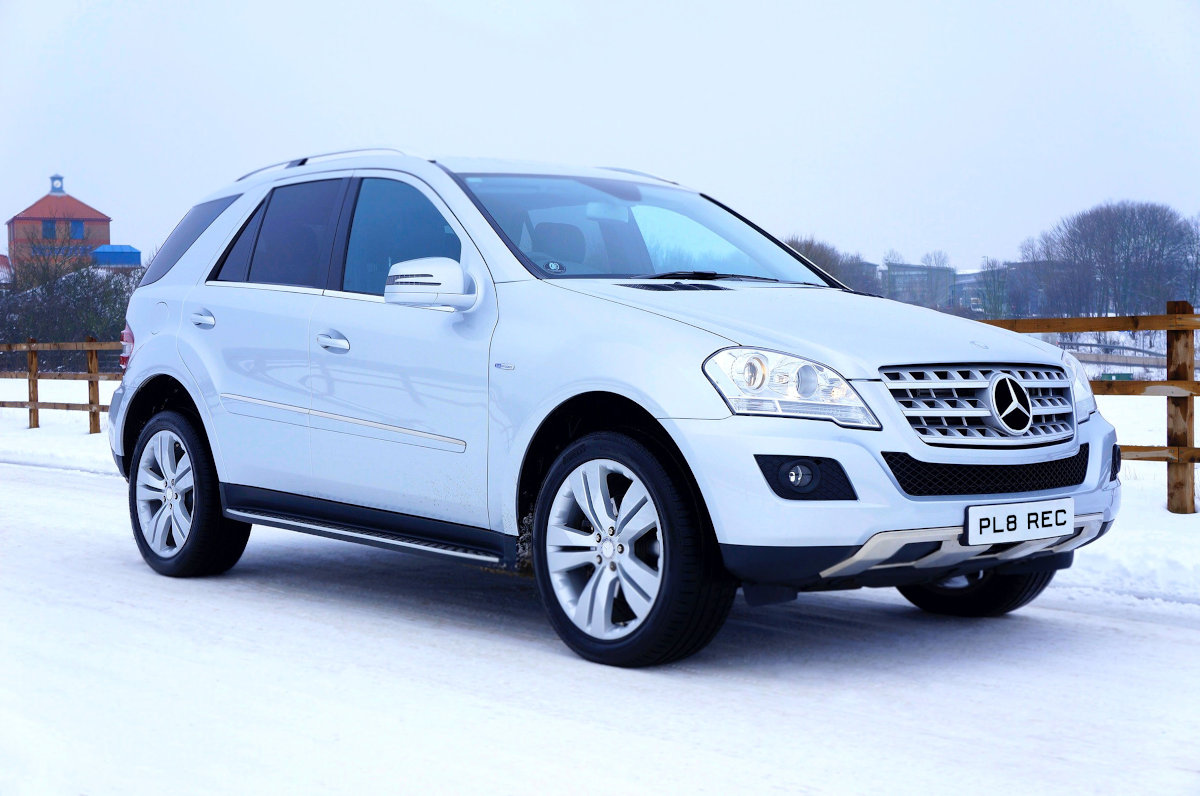
Here is an example of an email alert you would receive when an alert is triggered:
Subject: Alert on Vehicle Plate pl8rec in Site Test Site 1
The following Alert has been generated:
- Alert Name: Test Alert
- Time: 1 January 2026 at 11:06:53
- Timezone: America/Bogota
- Site: Test Site 1
- Camera: Site 1 entrance
Vehicle details:
License Plate: pl8rec
Plate Confidence Level: 0.866
Vehicle Type: Sedan
Vehicle Tag:
Vehicle Make: Mercedes-Benz
Vehicle Model: M-Class
Vehicle Color: Red
Message: Full name: John Doe
Photo:
See the Recent Alerts in ParkPow.
Webhook Alert Example
Here is an example of a webhook payload you would receive when an alert is triggered:
{
  "alert_name": "Test Alert",
  "alert_tags": "",
  "time": "1 January 2026 at 11:06:53",
  "timezone": "America/Bogota",
  "site": "Test Site 1",
  "camera": "23026",
  "camera_code": "entrance_2",
  "camera_name": "Site 1 entrance",
  "spot_tags_matched": "",
  "license_plate": "pl8rec",
  "visits": 24,
  "confidence_level": 0.866,
  "vehicle_id": 40780288,
  "vehicle_type": "Sedan",
  "vehicle_tag": "",
  "vehicle_make": "Mercedes-Benz",
  "vehicle_model": "M-Class",
  "vehicle_url": "https://app.parkpow.com/vehicles/40780288",
  "vehicle_color": "Red",
  "message": "Full name: John Doe",
  "photo": "",
  "visit_start_data": "{\"box\":{\"xmin\":967,\"ymin\":501,\"xmax\":1071,\"ymax\":544},\"plate\":\"pl8rec\",\"region\":{\"code\":\"gb\",\"score\":0.72},\"score\":1.0,\"candidates\":[{\"score\":1.0,\"plate\":\"pl8rec\"},{\"score\":0.841,\"plate\":\"plbrec\"}],\"dscore\":0.889,\"vehicle\":{\"score\":0.92,\"type\":\"SUV\",\"box\":{\"xmin\":117,\"ymin\":156,\"xmax\":1112,\"ymax\":667}},\"model_make\":[{\"make\":\"Mercedes-Benz\",\"model\":\"M-Class\",\"score\":0.499},{\"make\":\"Mercedes-Benz\",\"model\":\"GLE-Class\",\"score\":0.201},{\"make\":\"Generic\",\"model\":\"Unknown\",\"score\":0.004}],\"color\":[{\"color\":\"silver\",\"score\":0.583},{\"color\":\"white\",\"score\":0.228},{\"color\":\"brown\",\"score\":0.048}],\"orientation\":[{\"orientation\":\"Front\",\"score\":0.902},{\"orientation\":\"Rear\",\"score\":0.067},{\"orientation\":\"Unknown\",\"score\":0.032}],\"year\":{\"year_range\":[2006,2010],\"score\":1.0},\"direction\":344,\"direction_score\":0.532}",
  "visit_end_data": "{}",
  "visit_id": 179981434,
  "visit_timestamp": "2026-01-01T11:06:53Z",
  "visit_timestamp_iso": "2026-01-01T11:06:53.334139-05:00",
  "use_fallback_direction": false
}
Related Resources
To monitor vehicles in specific parking spots, check ParkPow Spotter Configuration.